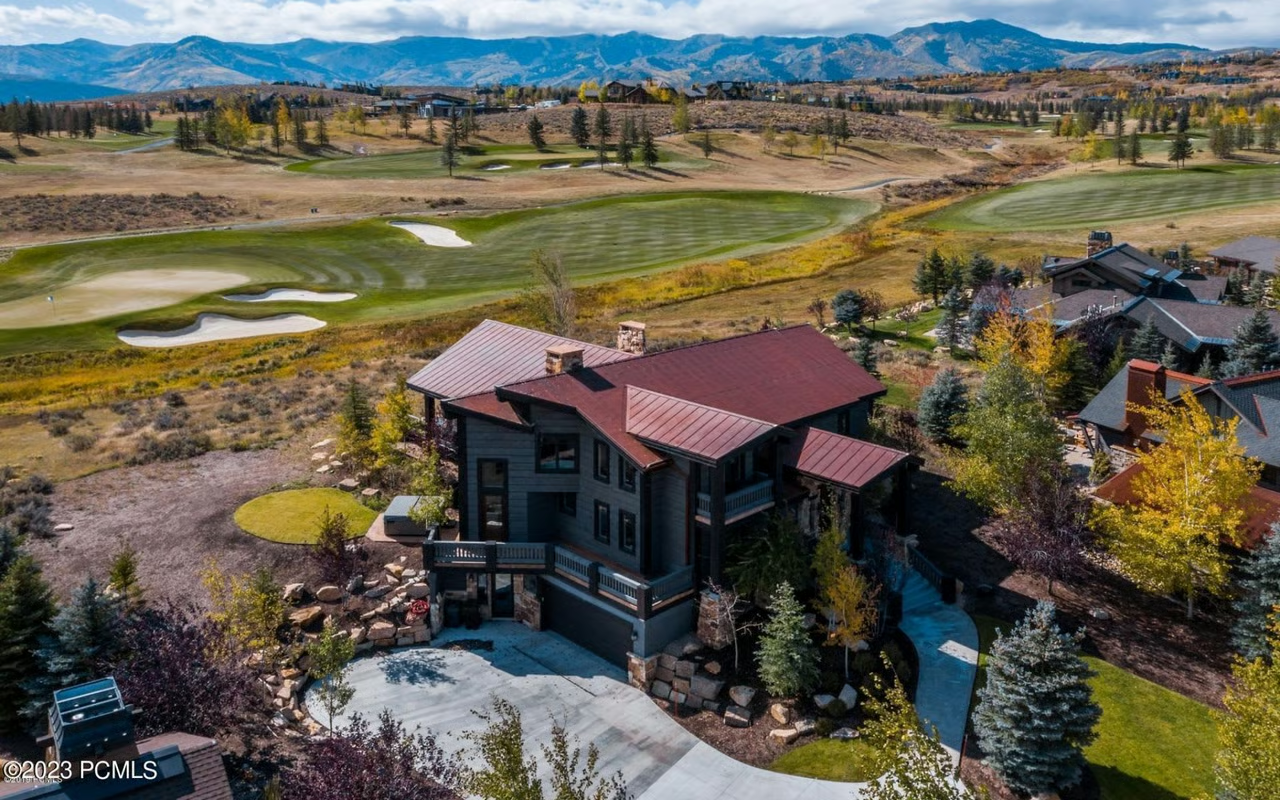
Jeremy Ranch is an unincorporated, golf-course residential neighborhood in the Snyderville Basin, set just off I-80 a few minutes from Kimball Junction. Its investable stock is almost entirely residential rental property rather than commercial, which means a 1031 exchange file assembled around a Jeremy Ranch sale usually has to look elsewhere in the basin for a commercial or income-property replacement.
A Residential, Golf-Adjacent Submarket
Most investment property in Jeremy Ranch consists of single-family homes and townhomes clustered around the Jeremy Ranch Golf & Country Club, leased to long-term tenants rather than short-term guests, since the neighborhood's covenants and its distance from the resort core make nightly rentals less common here than in Old Town or Canyons Village. That gives Jeremy Ranch a more conventional landlord-tenant structure than most Park City-area submarkets, with standard annual leases and fewer resort-association complications. A sale-side review should confirm lease term, security deposit handling, and any HOA restrictions on rentals before that property is compared against replacement candidates. Proximity to the Jeremy Ranch Park and Ride and the I-80 East Canyon interchange also supports steady long-term tenant demand from commuters working in Park City or the Snyderville Basin, which is a different demand driver than the nightly-rate tourism that supports most resort-core rentals.
Scope of the Replacement Search Beyond the Neighborhood
Because Jeremy Ranch itself offers little in the way of commercial product, an identification package for an owner selling here typically has to define what kind of replacement property actually serves the investor's goals before candidates are sourced.
- Current lease and tenant payment history
- HOA rental restriction disclosure, if applicable
- Title report on the relinquished property
- Market-comparable analysis for the target replacement asset class
- Lender preflight for the chosen replacement structure
Whether the investor moves toward a retail building at Kimball Junction, a small multifamily property, or a DST placement, each of those paths needs its own documentation package built out separately, since they carry different management and financing profiles.
Weighing Continued Residential Ownership Against Commercial Income
The most common decision point for a Jeremy Ranch exchange is whether to stay in single-family residential rental property, which the investor may already understand well, or move into commercial or multifamily income property with different management demands. That comparison should be run on cash-on-cash return and management time rather than on familiarity alone, and the market-comparable analysis should show both paths side by side before the identification list is finalized. An investor who values the predictability of a long-term residential lease may prefer another single-family or small multifamily property, while one looking to reduce hands-on management is usually better served comparing a leased commercial building or a DST placement directly against the Jeremy Ranch rental it replaces.
45-Day Sourcing When Local Inventory Is Thin
Since Jeremy Ranch rarely has comparable investment product for sale within the neighborhood itself, an owner should begin sourcing replacement candidates in the broader Snyderville Basin, including Pinebrook, Summit Park, or Kimball Junction, as soon as the relinquished property goes under contract, rather than waiting for the 45-day window to start. That lead time matters more here than in a submarket with deeper local inventory.
Final Coordination Before Filing
Before the identification notice is filed, the qualified intermediary should confirm the relinquished property's proceeds are properly held in escrow, the investor's tax advisor should confirm the replacement asset class satisfies like-kind scope, and the lender should confirm preflight terms for whichever structure, direct ownership or a DST, the investor has chosen. Given how different a Jeremy Ranch residential sale can be from a commercial replacement purchase, this review should not be skipped even when the transaction feels straightforward. A residential rental sale can look simple on paper, but the replacement side often introduces new documentation, whether a commercial lease abstract, a DST offering memorandum, or a multifamily rent roll, that the investor's team hasn't had to review before. Building that review into the file early, rather than after an identification candidate is already under contract, gives the qualified intermediary and lender time to flag any gap before it becomes a closing-week problem.
Common 1031 Exchange Questions
Does a Jeremy Ranch single-family rental qualify for a 1031 exchange?
Yes, residential rental property held for investment generally qualifies, and it can be exchanged into commercial property or another residential rental, as long as the replacement is also held for investment or business use.
Can I exchange a Jeremy Ranch home for a commercial building in Kimball Junction?
Real property is broadly like-kind to other real property regardless of asset class, so that exchange is generally permitted, though the investor's tax advisor should confirm the specific structure fits their situation.
What if my Jeremy Ranch HOA restricts short-term rentals?
That restriction should be disclosed as part of the sale-side documentation, since it affects how the relinquished property's income has historically been generated and how a buyer or replacement analysis should treat it.
Is a DST a good option for someone exiting direct residential management?
It can be, particularly for an owner who wants passive income without landlord responsibilities, though the DST's structure and asset class should be confirmed with the investor's tax advisor before it's added to the identification list.
How far should I look for replacement property if Jeremy Ranch itself has nothing comparable?
Most investors widen the search to the broader Snyderville Basin or beyond, since like-kind scope covers investment real property nationwide rather than only the immediate neighborhood.